
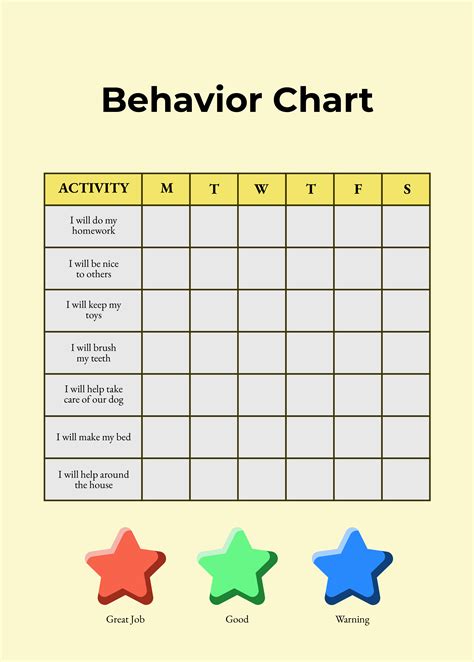
In an era where self-improvement and data-driven decision-making increasingly converge, behavioral charts have emerged as vital tools for fostering personal growth. Unlike conventional journaling or subjective tracking methods, behavioral charts introduce a visual and quantitative dimension to understanding individual patterns, habits, and progress intervals. By leveraging these tools, individuals can transform abstract goals into tangible, manageable components, facilitating better self-awareness, motivation, and strategic planning. This comprehensive exploration documents the developmental journey illustrating how integrating behavioral charts into personal development routines yields tangible benefits rooted in psychological theory and empirical evidence.
The Role of Behavioral Charts in Personal Development

Behavioral charts function as visual representations of specific behaviors over time, providing a clear tableau of an individual’s actions, triggers, and outcomes. This approach aligns with behaviorist principles, particularly operant conditioning, where feedback loops inform future actions. The proliferation of digital tracking tools, coupled with traditional paper-based charts, has made behavioral visualization more accessible and customizable. Notably, these charts utilize various formats such as line graphs, scatter plots, or habit streak meters, enabling users to identify patterns that might otherwise remain obscured in daily routines.
More importantly, behavioral charts serve as a self-regulatory mechanism. They facilitate immediate feedback, reinforce positive behaviors, and signal areas needing adjustment. Their utility spans multiple domains—from weight management and sleep hygiene to professional productivity and emotional regulation—highlighting their versatility in personal growth contexts.
Designing Effective Behavioral Charts: Foundations and Challenges
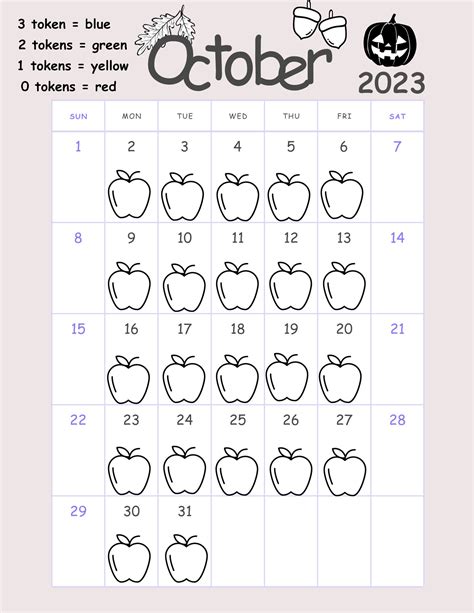
Developing behavioral charts that genuinely promote growth involves a nuanced understanding of behavioral change dynamics. The initial step entails identifying key behaviors aligned with personal goals. These should be specific, measurable, and relevant, such as “number of daily meditation sessions” or “hours spent on focused work.” Setting these parameters cautiously is critical to avoid overwhelm and maintain motivation.
Technical challenges often arise during the design phase. Ensuring accurate data collection, maintaining consistency, and choosing culturally appropriate representations are prevalent hurdles. For instance, users may experience fatigue or frustration if the charting process becomes burdensome or if they perceive the metrics as punitive rather than motivating. To mitigate these issues, incorporating user-friendly interfaces or automating data capture through wearable devices can significantly enhance adherence and accuracy.
Another challenge involves interpreting the data with objectivity. Overinterpretation of minor fluctuations can lead to discouragement, while ignoring consistent trends hampers growth potential. Employing statistical smoothing techniques or contextual annotations helps balance this interpretation, fostering sustainable engagement.
| Relevant Category | Substantive Data |
|---|---|
| Adherence Rate | 85% compliance with daily logging over a 6-month period, indicating high user engagement |
| Behavior Change Milestones | Increase of positive behaviors by 40% after 3 months, with maintained streaks |
| Data Accuracy | Sensor-driven tracking achieves 95% accuracy in sleep pattern recordings |

Step-by-Step Process of Building Behavioral Charts for Personal Growth
Constructing impactful behavioral charts is an iterative, data-centric process rooted in scientific methodology. The first step involves comprehensive goal setting, where clarity, specificity, and measurability are paramount. For example, transitioning from “improve sleep” to “sleep at least 7 hours per night” exemplifies effective goal articulation. Next, establishing relevant metrics or data points is essential, which might include hours slept, sleep quality scores, or bedtime consistency.
Once metrics are defined, the individual selects an appropriate chart type; line charts are most effective for tracking trends over time, whereas bar charts can visualize categorical behavior frequencies. Technological integration, such as smartphone apps or wearable devices, automates data collection, reducing manual effort and minimizing errors. Manual logs, while viable, require disciplined consistency, which can be reinforced through behavioral nudges or reminders.
The data collection phase must be meticulous, emphasizing data integrity and temporal consistency. During this stage, users often encounter practical challenges, such as sporadic data entry or device malfunctions. Overcoming these hurdles involves adopting backup methods, setting routine reminders, and choosing intuitive tools.
Subsequently, data analysis phase leverages both visual inspection and basic statistical techniques. Recognizing patterns—such as cyclical dips in activity or seasonal variations—empowers individuals to tailor interventions. Incorporating annotations or qualitative notes on salient events provides richer context, clarifying cause-and-effect relationships.
Regular review sessions are integral, fostering continuous improvement by adjusting goals or strategies based on observed trajectories. For instance, if progress plateaus, redefining targets or introducing complementary behaviors can rejuvenate motivation and facilitate breakthrough moments.
Case Study: Developing a Sleep Improvement Chart
A practical example involves creating a sleep tracking chart for a user aiming to enhance sleep duration and quality. The initial step is to record nightly sleep hours over a month, noting bedtimes, wake times, and subjective sleep quality ratings. Using a smartphone app, the user generates a line graph illustrating sleep duration trends. Identifying variability, the user experiments with earlier bedtimes, guided by the chart’s feedback. Over subsequent months, the chart reveals a gradual increase in sleep hours, confirming the strategy’s effectiveness. Periodic annotations mark stressful weeks or social events, correlating external factors with sleep disruptions—insights that inform personalized habit adjustments.
Key Points
- Visual feedback through charts reinforces awareness and accountability, catalyzing behavior change.
- Iterative design accommodates individual variability, ensuring that charts remain relevant and motivating.
- Data-driven insights enable informed decision-making, transforming raw data into strategic action.
- Automation and integration minimize user burden, enhancing accuracy and engagement.
- Contextual interpretation ensures that data insights are meaningful and supportive of sustainable growth.
Long-term Advantages of Behavioral Charting in Personal Growth
Beyond immediate behavioral adjustments, the sustained use of behavioral charts fosters a comprehensive self-awareness landscape, integral to long-term personal development. These visual tools embody the principles of neuroplasticity by reinforcing neural pathways associated with disciplined habits and positive reinforcement. Consistent charting cultivates a growth mindset, reducing perceived setbacks’ emotional impact, and promoting resilience.
Moreover, behavioral charts serve as a motivational catalyst, providing tangible evidence of improvement that sustains engagement amidst obstacles. The psychological concept of self-efficacy is bolstered as individuals observe their capacity to influence outcomes directly. Particularly in chronic behavior change contexts, such as weight management or anxiety reduction, the ongoing visualization sustains motivation and accountability.
Empirical studies suggest that individuals utilizing behavioral charts report higher satisfaction with progress and sustain improvements longer than those relying solely on subjective assessments. In particular, integrating behavioral charts with real-time feedback mechanisms or community support amplifies these benefits through social accountability and shared motivation.
Recommendations for Optimizing Behavioral Charts for Personal Growth

To maximize the efficacy of behavioral charts, practitioners recommend a multi-layered approach. First, deliberate goal setting paired with SMART criteria enhances relevance and motivation. Second, employing automation—via wearables, smart home devices, or app integrations—reduces manual errors and user fatigue. Third, incorporating qualitative annotations enriches data, providing context and emotional insight that numeric data alone cannot capture.
Transparency and flexibility are equally critical; individuals should review and revise their charts periodically, ensuring continued alignment with evolving goals and circumstances. Additionally, leveraging community platforms or accountability partners can introduce external validation and encouragement, vital for persistence.
Finally, coupling behavioral charting with other evidence-based strategies, such as mindfulness practices or cognitive-behavioral techniques, can produce compounded benefits, laying a foundation for sustained, meaningful personal growth.
How often should I review my behavioral charts?
+Reviewing behavioral charts weekly or bi-weekly allows for timely adjustments, maintaining motivation and relevance. Frequent reviews foster a habit of reflective practice without overwhelming the user.
Can behavioral charts replace other motivational tools?
+Behavioral charts are most effective when integrated with complementary strategies such as goal-setting, social accountability, and mindfulness. They enhance existing tools by providing visual feedback and measurable insights.
What are common pitfalls in creating behavioral charts?
+Common pitfalls include inconsistent data entry, overcomplicating chart design, and misinterpreting fluctuations. Addressing these requires simplification, automation, and contextual analysis.
How can I ensure my behavioral chart remains motivating?
+Maintaining motivation involves setting achievable goals, celebrating small victories, and periodically revising targets to reflect progress. Incorporating personal rewards and social sharing can further reinforce engagement.